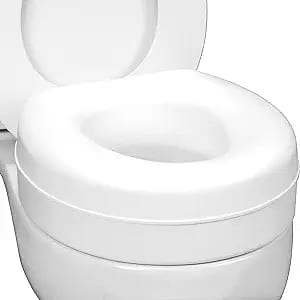
Toilet Seat Riser Maintenance for Safety and Hygiene
A raised toilet seat increases the seat height of your toilet, making it easier to sit down and stand up.
That is a significant help during surgery recovery, when living with mobility issues, or when joint strain makes low seats difficult to use.
Still, a riser only helps if it stays clean, stable, and in good shape. The good news is that keeping your equipment in top condition is usually simple.
Most models need regular wiping, occasional deeper cleaning, and quick safety checks.
The exact routine may vary based on the material and how the unit attaches to the toilet, but sticking to a consistent schedule for toilet seat riser maintenance is the best way to ensure safety and hygiene.

- Toilet Seat Riser with Handles: Our easy-to-clean toilet seats are designed for individuals who have difficulty sitting down or getting up from the toilet
- Raised Toilet Seat with Arms: The toilet seat adds 5 inches of height to your toilet seat, making it easier and safer to sit or stand.Use a non-abrasive detergent or household cleaner with warm water
- Adjustable Armrests: Easily remove or adjust armrest height to fit your needs; our toilet seat risers make perfect elderly assistance products and handicap accessories for daily living
- Tool-Free Installation: Simple locking toilet riser provides a reliable, secure fit on almost any toilet with tool-free installation
- Dimensions: 16.5 inches in depth x 17 inches in width x 5 inches in height; width between arms: 18 inches; overall height: 10 inches; weight capacity: 300 lbs

Last update on 2026-09-16 / Affiliate links / Images from Amazon Product Advertising API
Key Points
- Prioritize Regular Hygiene: Wipe the riser down daily to remove body oils and residue, performing a deep cleaning at least once a week to prevent odor and grime buildup.
- Use Gentle Cleaning Methods: Avoid abrasive sponges, stiff-bristled brushes, and harsh chemicals such as heavy-duty bleach, as these can scratch or degrade the surface finish.
- Perform Routine Safety Checks: Inspect clamps, screws, and rubber pads during every cleaning session to ensure the seat is stable and free from wobbling or cracks.
- Monitor for Wear and Damage: Replace the unit if it shows significant cracks, warped edges, or if it slips repeatedly, as makeshift repairs like taping or shimming compromise user safety.
The everyday cleaning routine that keeps a residence sanitary
A raised toilet seat sits in one of the highest-touch spots in the bathroom. Because of that, it should be cleaned regularly, not just when it looks dirty.
Small splashes, body oils, and cleaner residue can build up fast. Over time, that can lead to stains, odors, and a tacky surface.
For most homes, detergent and warm water are enough for routine maintenance. If you want extra germ control, use a mild disinfectant or an antibacterial spray on a non-abrasive cloth.
White vinegar is another effective option for those who prefer natural solutions.
Wipe the riser, the edges, and any seams or attachment points.
After that, rinse or wipe with clean water if the label says to, then dry the surface.
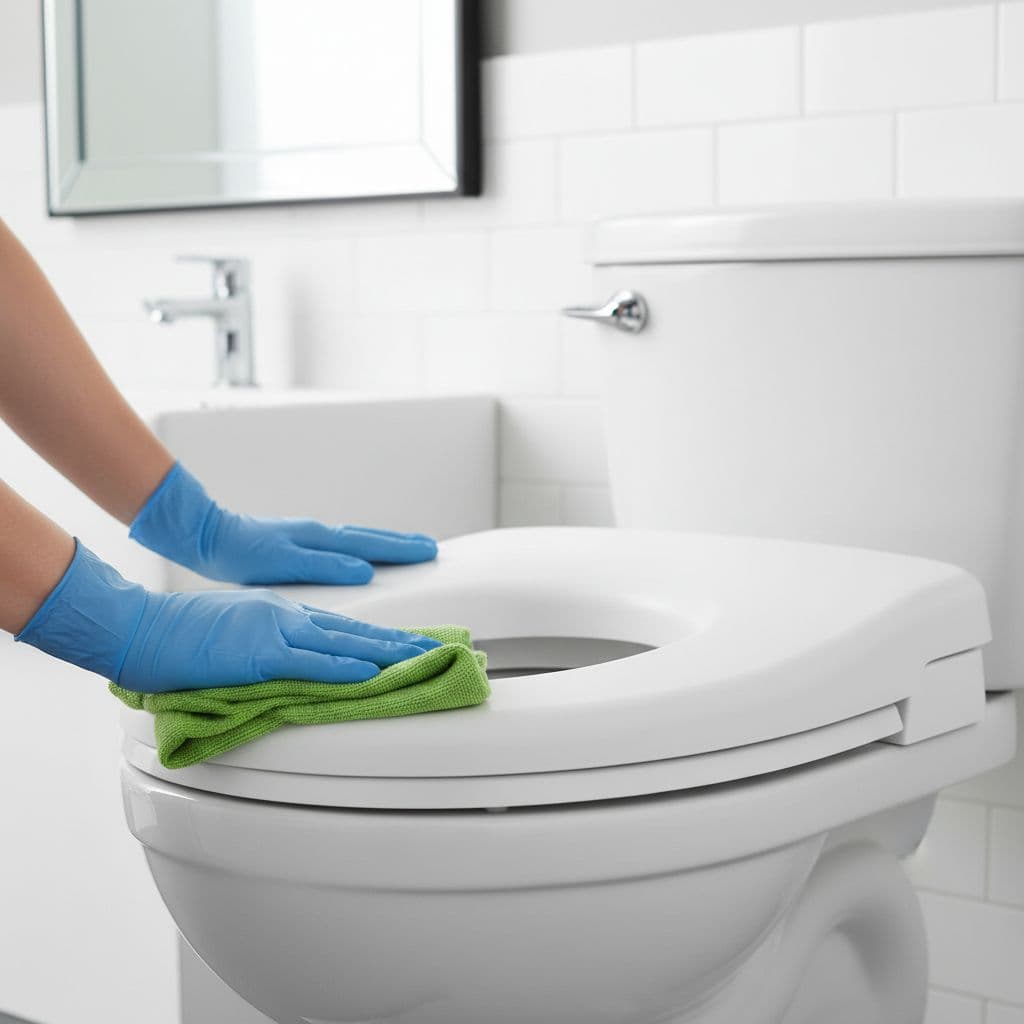 Using a non-abrasive cloth is essential for protecting the finish of your equipment. Plastic models are generally easy to clean, provided you avoid tools that cause microscopic scratches.
That lines up with the American Cleaning Institute’s plastic cleaning advice, which recommends soft cloths and gentle cleaners for plastic surfaces.
What to use, and what to avoid on the surface
Safe cleaning tools are plain and easy to find. Mild soap, warm water, soft cloths, and disinfecting wipes usually do the job.
If your riser came with specific care instructions, follow those first.
Harsh products can wear down the finish faster than many people expect. Strong bleach mixes, abrasive powders, scouring pads, and stiff brushes can scratch plastic or damage coated surfaces.
Once the finish gets rough, it can hold onto grime more easily.
If a riser feels rough, sticky, or faded after cleaning, the cleaner may be too harsh.
That same caution matters for cushioned models. Their outer covering can crack or weaken if it dries out from strong chemicals.

- TOILET SEAT ELEVATOR — ELONGATED. A toilet seat riser that that installs under your existing toilet seat for added personal comfort. Fits Most elongated Toilet bowls.
- ADDS 3.5 INCHES TO THE TOILET SEAT HEIGHT. A 3.5 raised toilet seat that is also very comfortable. The toilet seat helps senior and handicap sit or get up from toilet easily
- FITS ELONGATED TOILET SEATS. The toilet seat riser will fit elongated toilets.Do not use abrasive cleaners or cloths to avoid damaging the seat
- EASY INSTALLATION. 3-step easy installation allows toilet seat to be installed in a minute or two. Fits most elongated toilets
- VERY COMFORTABLE. A raised toilet seat that is very comfortable. Toilet seat is designed fit under your existing toilet seat for added personal comfort and is designed for those who weight 300 lbs or less
Last update on 2026-09-15 / Affiliate links / Images from Amazon Product Advertising API
How often to wipe and deep clean it
A quick wipe every day or every few uses is a smart habit, especially in a shared bathroom. Then do a fuller cleaning at least once a week.
Homes with frequent use, incontinence care, or recent illness may need more attention.
If the riser is removable, take it off on a regular schedule and clean underneath it, too. Whether you have a clamp-on style, a hinged design, or a bolt-on toilet seat, these attachments can trap moisture around the rim.
That hidden area is easy to miss, and it is often where odors start.
For caregivers or older adults who want low-effort upkeep, keeping supplies nearby helps.
A soft cloth and a gentle cleaner under the sink can turn the job into a one-minute task.
How to check for loose parts, wear, and damage
Cleanliness matters, but stability matters just as much. A riser that shifts even a little can create a real fall risk, which is why prioritizing bathroom safety through regular inspections is essential.
A quick safety check should be performed during every cleaning session to ensure the equipment remains reliable.
Look at every part that holds the riser in place. This includes clamps, locking mechanisms, screws, rubber pads, and hand grips.
Press down lightly on both sides of the seat to ensure it feels solid with no rocking or sliding. You should also inspect for cracks in the plastic, worn pads, or components that appear bent.
If you want a broader walkthrough, this article on proper maintenance for a raised toilet seat offers additional cleaning and inspection tips for daily use.
Signs the riser is no longer secure
Some warning signs are easy to miss at first. The seat may wobble when you sit down or slide a little when your weight shifts.
In some cases, it squeaks or clicks because the hardware is not meeting its weight capacity or is shifting under pressure.
A secure riser should stay put every time. If it tips, slips, or feels uneven, stop using it until you fix the problem.
Tightening the attachment may create a secure fit, but if it doesn’t, the seat may no longer be compatible with your toilet.
A toilet seat riser should feel predictable. Any movement undermines stability and confidence.
Also, pay attention after deep bathroom cleaning. If the riser was removed and reattached, check the fit again before anyone uses it.
When to repair it or replace it
Some problems are minor. A loose screw, a shifted clamp, or a missing rubber pad may be easy to fix. If the manufacturer sells replacement parts, that can extend the life of the riser.
Other problems call for replacement. Cracked plastic, warped edges, split cushioning, and locking hardware that won’t stay tight usually mean the seat is no longer reliable.
Don’t try to shim it with towels or tape. A bathroom assist device should never depend on a workaround.
If the riser slips more than once after you tighten it, treat that as a sign to replace it. A new seat costs less than the harm a fall can cause.
Why does the material change how much care it needs
Not all risers age the same way. The material affects how easy the seat is to wipe down, how much moisture it holds, and how soon wear shows up.
When selecting a raised toilet seat to assist with mobility issues, the surface material often determines how much maintenance is required each week.
This quick comparison helps set expectations:
| Material | Cleaning effort | Common issue | Low-maintenance fit |
|---|---|---|---|
| Plastic | Low | Surface stains or scratches | Excellent |
| Cushioned or padded | Moderate | Moisture, odor, seam wear | Fair |
| Wood or wood-core | Moderate to high | Finish wear, water damage | Lower |
In most homes, smooth plastic is the easiest to live with. It dries fast, shows damage clearly, and usually handles mild soap well.
Plastic, cushioned, and wood models compared
Plastic models are common for a reason. They resist moisture well and clean up with basic supplies.
Whether you are using a model with an elongated toilet bowl or a round-bowl toilet, hard surfaces make it easy to spot cracks or looseness.
Cushioned models may feel softer, but they need more attention.
Seams can trap moisture, small tears can grow, and stains may set faster if cleaning gets delayed.
By contrast, plastic is widely considered the easiest-to-clean option for busy households.
Wood models are less common, though some people prefer the aesthetic.
They usually need gentler care because water can wear the finish over time. If moisture gets into chipped areas, the seat may swell or weaken.
When you use disinfectants on plastic, contact time matters.
This guidance on safely sanitizing plastics explains why following the label and wiping with a soft cloth helps protect the surface.

- Very Comfortable Toilet Riser… Carex raised toilet seats are very comfortable and our toilet riser with handles is designed to support up to 300lbs. E-Z lock toilet seat base makes this handicap toilet seat a leader in toilet seat risers for seniors
- Toilet Seat Lifter That Fits Most Toilets… The toilet seat riser will fit round, standard, and elongated toilets. The hole in the middle is 9”. The handicap toilet seat with handles over toilet has adjustable arms of 18-20″ a seat 15 1/2″ wide
- Toilet Riser Seat Adds 5 Inches To Toilet Seat Height… A 5” raised toilet seat provides toilet seat assistance for elderly and helps handicap sit or get up from toilet easily via the handles
- Raised Toilet Seat With Handles and Lock… A toilet seat riser that locks securely to toilet seats. Elevated toilet seat comes with toilet seat handles that are padded, acting as a comfortable and safe toilet chair
- Very Stable, Easy Installation… 3-step easy installation allows toilet seat to be installed in a minute or two. The toilet handles are also easy to install and can be removed via several screws
Last update on 2026-09-15 / Affiliate links / Images from Amazon Product Advertising API
Which option is easiest for low-maintenance use
For simple upkeep, a high-quality plastic riser is often the best choice. Smooth surfaces are faster to sanitize, and fewer seams mean fewer hiding spots for grime.
A basic design, including models with adjustable height features, also makes it easier to inspect the hardware for damage.
If you are still comparing models, these raised toilet seat options for limited mobility show the kinds of simple designs that are often easiest to maintain.
That does not mean every plastic model is equal. Seats with bulky shapes, deep grooves, or complex locks may take longer to maintain.
When consistent hygiene is a top concern, a simple design usually wins.
Simple habits that help a riser last longer
A few small habits can significantly extend the lifespan of your raised toilet seat. First, always dry the surface after cleaning.
Water left around seams, pads, or clamps can lead to odor and premature wear. Second, check the fit after any adjustment, as a seat that was secure last week may loosen after removal or heavy use.
Consistent maintenance is essential for preserving long-term bathroom accessibility for all users.
It also helps to avoid over-tightening hardware. Users often crank clamps down too hard, which causes the plastic to stress and crack. Tight is secure, but forced is counterproductive.
Follow the manufacturer’s instructions so the unit sits firmly without unnecessary strain.
This is especially important for users with arthritis, who may find precise, gentle adjustments easier to manage if the hardware is not overtightened.
Daily use habits matter as well. Always sit up straight and avoid dropping your full weight onto one side, ensuring you stay well within the product’s weight capacity.
Do not use the seat as a step stool or push off from the unstable edges; instead, use mounted grab bars for stability and support. These habits prevent excessive stress on the frame.
If your model is removable, store it in a dry location when it is not in use.
Additionally, ensure you regularly sanitize the toilet opening to prevent buildup. If cleaning under the rim feels difficult, choose a simpler design next time.
A seat that is easy to wipe down is much more likely to remain sanitary and durable for years to come.

- ADDED 5″ of HEIGHT & with HANDRAIL:The raised toilet seat adds 5 inches of height to your toilet seat and features safety grab bars to make it easier and safer to sit or stand.
- ANTI-ROLLOVER SUPPORT LEG:WeHwupe high toilet seat for seniors has added leg support to prevent side-to-side tipping and can hold up to 350 lbs.
- HEIGHT & WIDTH ADJUSTABLE:The width between arms can be adjusted to 21.3″ & 23.6″, and the height of the support legs can be adjusted to fit toilets from 13.5″ to 20.1″ in height.
- SIMPLE ASSEMBLY AND USE:Easily assembled in minutes without tools.The handle of the toilet seat is padded with soft, non-slip foam for a comfortable and secure grip. The handle and seat are also easy to clean, simply wipe with a damp cloth.
- FIT MOST TOILET:The toilet seat risers for seniors fits most elongated and round toilets with an internal length of 11.4″ to 14.6″.
Last update on 2026-07-01 / Affiliate links / Images from Amazon Product Advertising API
Frequently Asked Questions
How can I tell if my toilet seat riser is safe to use?
A safe riser should feel completely rigid and predictable when you sit on it. If you notice any wobbling, sliding, or squeaking, check the mounting hardware for tightness; if it still moves after being secured, it is time to replace it.
Can I use household bleach to disinfect my raised toilet seat?
It is generally best to avoid strong bleach, as it can damage plastic finishes and cause cushioned covers to crack or weaken. Opt for mild soap and warm water, or use a gentle, non-abrasive disinfectant spray recommended for your specific material.
How often should I remove the riser to clean underneath it?
If your model is removable, you should take it off for a deep cleaning at least once a week or whenever you deep-clean the rest of the bathroom. Moisture and bacteria often accumulate around the rim and attachment points, which can cause odors if not cleaned regularly.
Is it normal for the plastic on my riser to have minor scratches?
While small scuffs may occur over time, you should avoid creating them by using soft microfiber cloths rather than abrasive pads. If the surface becomes noticeably rough or tacky, it is likely that the finish has been damaged, making the seat harder to keep clean and more prone to harboring bacteria.
Our Conclusion
A raised toilet seat does not require much effort, but it does need consistent care to remain effective.
By keeping up with daily cleaning and performing weekly inspections, you ensure that your equipment stays hygienic and reliable.
Most upkeep takes only a few minutes, but that routine pays off by supporting long-term bathroom safety.
By staying alert for cracks or wear and confirming a secure fit before every use, you can enjoy a comfortable, stable experience every day.